Starlink Becomes a Standard Feature in Tesla’s Fleet
Elon Musk announced on X that every Tesla could ship with an integrated Starlink antenna by the end of next year, a move designed to power the company’s unsupervised Full Self‑Driving (FSD) vision.
Market Competition and the Starlink Edge
Embedding high‑bandwidth satellite internet gives Tesla a distinct moat against rivals like Waymo, Cruise and emerging robotaxi startups. While most competitors rely on 5G or cellular fallback, Tesla’s satellite link promises global coverage and a dedicated data pipe for navigation, fleet management and passenger entertainment.
- Reduced reliance on third‑party carriers lowers operating expense per mile.
- Instant over‑the‑air updates for AI models stay on‑line even in remote corridors.
- Starlink’s exclusivity creates a premium “connected‑car” badge that can be monetized.
Startup Strategy: Monetizing Connectivity
Venture‑backed mobility platforms can learn from Tesla’s playbook:
- Tiered data packages – Offer free baseline bandwidth for navigation, then charge passengers for high‑definition streaming.
- Robotaxi subscription – Bundle connectivity into a monthly fee, improving unit economics.
- Enterprise fleet licensing – Sell bulk Starlink access to logistics firms that need constant connectivity for autonomous trucks.
Pricing, RAM Costs, and the AI Chip Roadmap
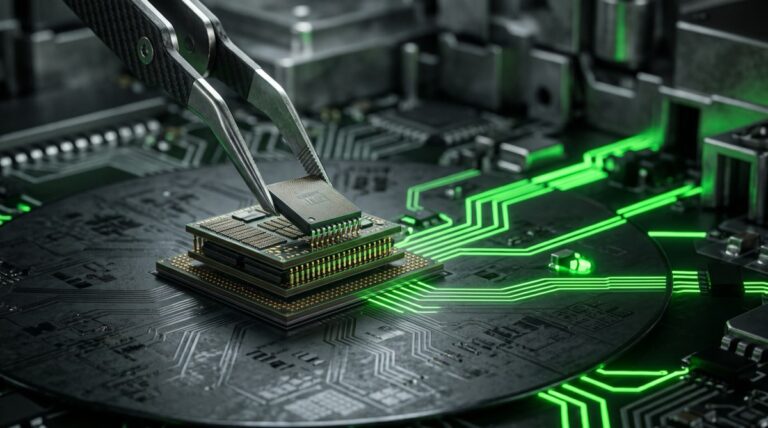
Musk revealed that the upcoming AI4.5 upgrade swaps 32 GB of LPDDR5X RAM for 24 GB to curb exploding memory prices. The trade‑off keeps the cost curve flat while delivering a modest performance bump for the FSD v15 stack.
According to Tesla’s release notes, v15 is 25× better at handling safety‑critical scenarios than v14, thanks to a “pixel‑perfect world model” that fuels synthetic data generation. The company’s next generational chip, AI5, will stay in the Optimus robot line for now, leaving cars at AI4 – a strategic decision to balance compute needs against price.
For a deeper dive on AI hardware economics, see TechCrunch’s analysis and Wired’s supply‑chain report.
Enterprise Adoption and the Robotaxi Play
The integration aligns with Tesla’s goal of letting owners opt‑in to the Robotaxi network. Trials could begin as early as next month, leveraging the high‑speed link for real‑time fleet coordination, remote diagnostics, and passenger infotainment.
Key implications for enterprise buyers:
- Lower latency for edge‑AI decisions improves safety margins.
- Predictable monthly connectivity fees simplify total cost of ownership calculations.
- Regulatory compliance (e.g., the China ban) forces regional strategy tweaks.
While Starlink remains illegal in China, the rest of the globe will soon see a unified, satellite‑backed connectivity layer that could reshape the economics of autonomous mobility.
Read more: Waymo Freeway Ban: Unit Economics Gap in the Robotaxi Race
Read more: Starlink’s $4.6K Gigabit Plan Sets New Bar for Maritime Connectivity